Mirror Mirror / Case study
Designing for the Second Location
Mirror Mirror began as a way to make the nonsurgical aesthetics work inside my father's growing practice into a distinct business with its own brand, team, and operating model. From the beginning, the question was not only how to open one location. It was what the first location would need to teach us if a second could work without depending entirely on the founders.
- Period
- 2011–2020
- Location
- Houston
- Field
- Aesthetics / Operations / Brand
- Role
- Co-founder / Equity Owner
- Status
- Equity sold in 2020
A small part of a growing practice
When I joined my father's medical practice, nonsurgical aesthetics was still a relatively small part of the broader operation. As the practice grew, my father and I were also looking for a new central-Houston location. My father, Philippe Bibi, and I co-founded Mirror Mirror as a distinct aesthetics business, with an operating model built to stand on more than one surgeon or one location.
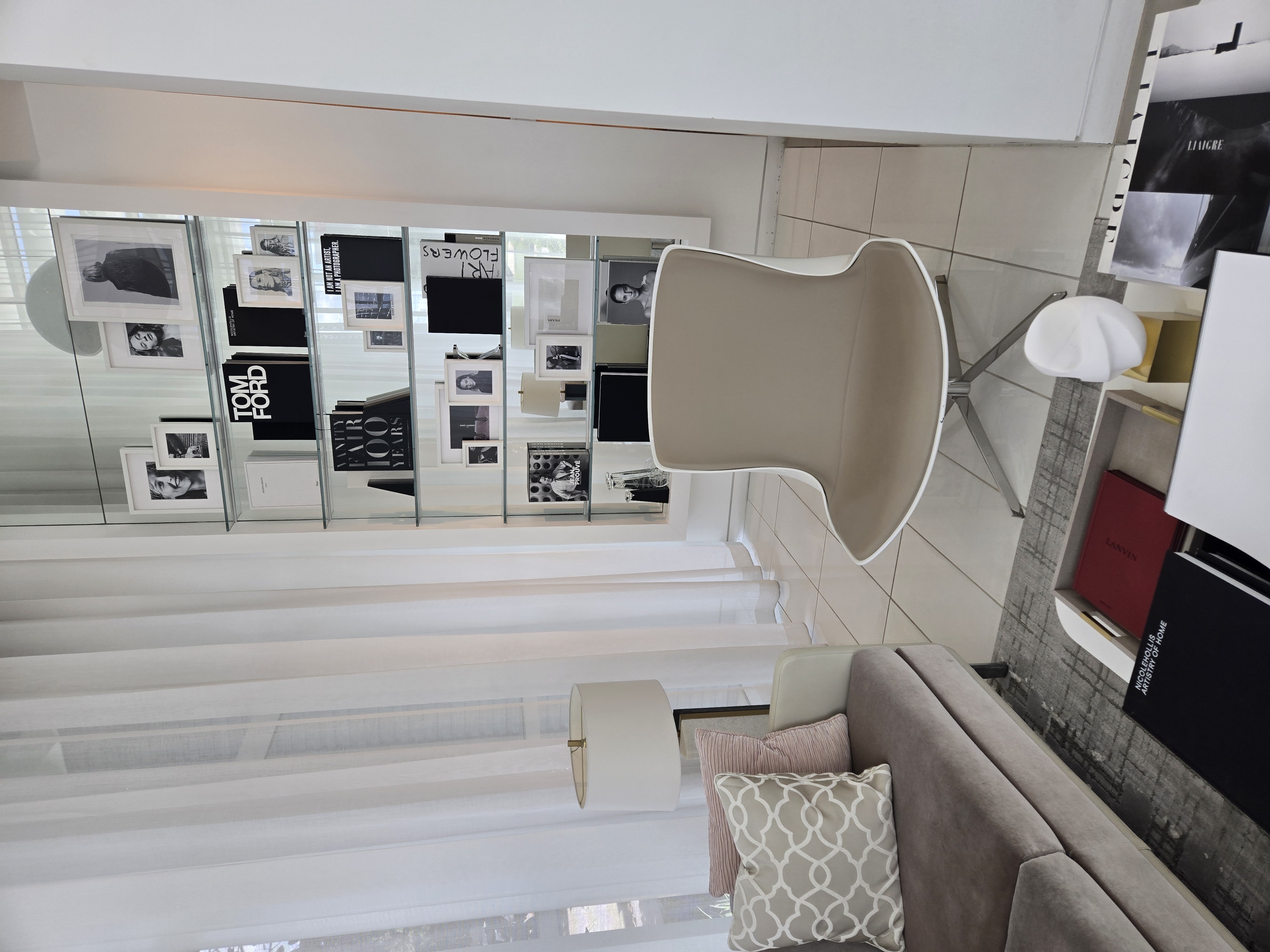
Mirror Mirror operated from the purpose-built 4208 Richmond facility. That building provided the physical setting for the first location, but this was not simply a new name for an existing function. We were building a separate concern around a brand, provider team, front office, client experience, equipment, and the operating work that connected them.
Philippe
I had known Philippe Bibi since I was young; he was the father of one of my elementary-school friends. By the time we became partners, he had spent a career in technology and finance and had far more business experience than I did.
We reconnected shortly after I joined the practice. Following the earthquake in Haiti, Philippe helped organize medical supplies for relief efforts. His family connection to Haiti made it personal. My father helped through his supplier relationships, and the effort renewed the connection between our families.
A conversation in the Mediterranean
That summer, Philippe invited my family to his home in the South of France. I remember being on his boat in the Mediterranean and talking about life and the medical practice, which was growing quickly. Philippe had retired and, as I remember it, had grown tired of golf. He was interested in what was happening in the business and in whether there was a way to participate.
At first, Philippe was interested in partnering in the real estate we were considering for the practice. My father was not especially interested in a real-estate partnership. Instead, he pointed to the nonsurgical aesthetics side of the operation and suggested that, if Philippe wanted to invest and participate, we could build it into a distinct business.
Five locations in five years
Philippe agreed with one important condition: five locations in five years. That constraint changed the founding question. We were not only asking how to open one successful aesthetics business. We were asking how to design an operating model that could be repeated.
Mirror Mirror did not open five locations in five years. But the roadmap mattered from the beginning because it made the second location part of the design of the first. It required us to think about what could become repeatable and what still depended on the people in the room.
Building the first location
The first location required a substantial technology and equipment base. I remember approximately $1 million being invested in aesthetic technology before opening and building out Mirror Mirror.
The business also needed a full operating team. Nurse injectors, aestheticians, front-office staff, and other providers each made a different part of the experience possible. I was a co-founder and equity owner involved in building and operating the business. The challenge was to bring the brand, equipment, providers, client experience, and daily processes into a business that could work as a whole.
Designing for the second
Operating one location and designing an organization that can operate multiple locations are different problems. The first can sometimes rely on the founders' direct involvement and accumulated local knowledge. The second asks what has to be clear enough, systematic enough, and understandable enough that the work can travel.
As we worked through that question, the complexity became more visible. Replication was not only a matter of opening more physical space. It required better ways to understand, standardize, and manage the operation. The second location influenced the first even though it was never opened.
Software became more interesting
Replicating the physical aesthetics business would require substantial capital, providers, staff, and daily operating work at each location. Philippe and I became increasingly interested in the economics and scalability of software and SaaS.
At roughly the same time, the broader VCS organization’s need for better access to business information had led me to teach myself SQL. BIVI became part of the next chapter of my partnership with Philippe as we began building software around the work.
Leaving in 2020
In 2020, I sold my equity in Mirror Mirror as part of my broader decision to leave the family-business ecosystem and establish an independent career in investing. The VCS chapter explains that personal transition in greater depth.
Collaborators
- My father — Co-founder
Co-founded Mirror Mirror and created the clinical environment from which the nonsurgical aesthetics business emerged.
- Philippe Bibi — Co-founder / Partner
Co-founder, partner, and mentor whose experience in technology and business shaped the questions we became interested in solving.